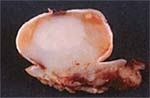
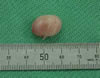
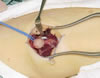
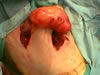
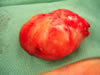
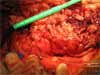
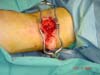
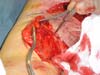
Neurofibromatosis is a genetic disorder in which many soft, fleshy growths of nerve tissue (Neurofibromatosis) grow under the skin and in other parts of the body.
Neurofibromatosis are growths of Schwann cells (which form a wrapping around peripheral nerve fibers) and other cells that support peripheral nerves. Neurofibromatosis, which can be felt under the skin as small lumps, usually start appearing after puberty. There are two types of neurofibromatosis: peripheral (type 1--also known as von Recklinghausen's disease) and central (type 2). Type 1 affects about 1 of 3,000 people, and type 2 affects about 1 of 40,000.
About half of the people with neurofibromatosis inherit it. Only one gene for neurofibromatosis--from one parent--is required for the disorder to develop, and each child of an affected parent has a 50% chance of inheriting the disorder. In the other half of the people with neurofibromatosis, it results from a spontaneous gene mutation. Thus, neurofibromatosis can occur in people who have no family history of the disorder.
This website is intended as an informational resource only for families and patients suffering from peripheral nerve injuries.
No attempt to provide specific medical advice is intended. It is not intended to infer that surgery is always the best
choice for a particular nerve injury. You should always contact a specialist directly for diagnosis and treatment of your
specific problem, and a second opinion is always a good idea.